
ALUMNI STORIES
SHUBHAM GAUTAM
Urban + Architectural Designer for ASPECT Studios, Perth WA. Completed Master of Urban Design. 2023
What is your professional background?
I’m originally from India, where growing up surrounded by rich culture and history sparked my interest in design and the built environment from a very young age. This early curiosity led me to pursue a Bachelor of Architecture. During the five-year program, I began to explore this interest in depth, working across a wide spectrum of scales and engaging with both design and technical aspects of architecture. During my graduation and in the years that followed, I completed internships and undertook small-scale freelance projects, gaining practical experience before pivoting to pursue a master’s degree.
Why did you decide to study urban design at AUDRC?
In the final two years of my bachelor’s degree, I worked extensively on urban design and large-scale landscape studios. This experience sparked a deeper interest in urban design and helped me understand the potential of design to create impact at a larger scale and improve the lives of multiple users. I became particularly interested in how cities and public spaces are shaped beyond individual buildings.
I also wanted a new outlook and exposure to how the built environment is approached outside my home country. This led me to explore programs in several Western countries and research different course structures. I was drawn to AUDRC because its urban design program is not solely policy-driven; instead, it integrates design thinking as a core component. The ability to curate units with a strong design focus aligned closely with my career aspirations. Additionally, the option to specialise or engage with areas such as planning and landscape offered greater flexibility and a broader understanding of the industry compared to other urban design programs across Australian universities.
How has studying urban design at AUDRC enriched your practice?
Studying urban design at AUDRC has significantly enriched my practice, particularly through the diversity of the cohort. Learning alongside people from different professional, cultural, and age backgrounds exposed me to a wide range of perspectives and highlighted the value of collaboration. Through this experience, I realised that design is not a unidirectional process; instead, it benefits from multiple viewpoints and shared insights. As a result, I have become less of a purist and more open to alternative approaches and ways of thinking.
AUDRC also strengthened my understanding of place and context. Through studio work and theory units, my professors consistently encouraged us to move beyond designing in isolation and to engage deeply with the social, cultural, and spatial nuances of each site. This emphasis on understanding the uniqueness of place has had a lasting impact on how I approach design today, making my practice more grounded, responsive, and context driven.
What inspires you? Professionally and/or personally?
I’m most inspired by the diversity of users and stakeholders in urban design. We’re not designing for a single client but for communities and anyone who experiences the space. That responsibility challenges me, but it’s also rewarding to know good design can positively affect many lives. The mix of voices, ideas, and challenges often leads to unique and creative outcomes, and that collaborative complexity is what drives me.
Can you talk about a specific project or projects of interest that you worked on?
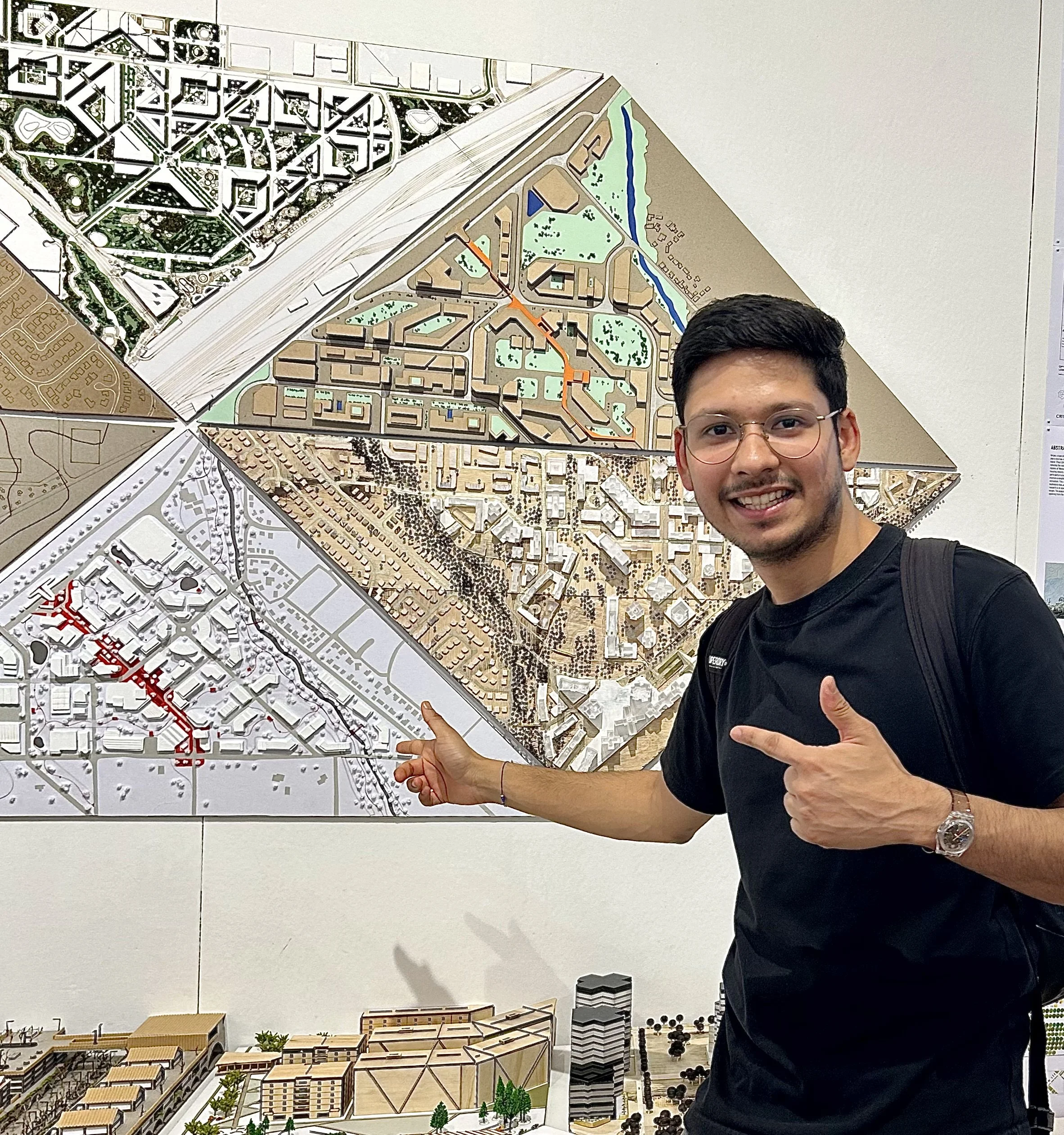
I’ve been fortunate to work across a wide range of projects through both AUDRC studios and my professional role at Aspect Studios. One of the most formative university projects was the Beckenham Station precinct redevelopment, which evolved from a conventional approach into a more exploratory scheme through studio discussions. This project encouraged me to challenge established planning frameworks, explore multiple design responses, and rethink the spatial and built form logic of a station precinct while remaining grounded in place and identity.
In professional practice, my experience at Aspect Studios has spanned small- to medium-scale projects across Western Australia, alongside large-scale master planning and citywide public realm projects in the Middle East. Locally, the Maylands town centre revitalisation project stood out for its focus on balancing the aspirations of local businesses with the need to establish a long-term, sustainable framework, informed by close observation of daily user patterns. Another key project was Armadale Central Park, recently approved, which integrates a station interface, youth plaza and destination play spaces to reposition the station as a civic destination rather than simply a point of transit.
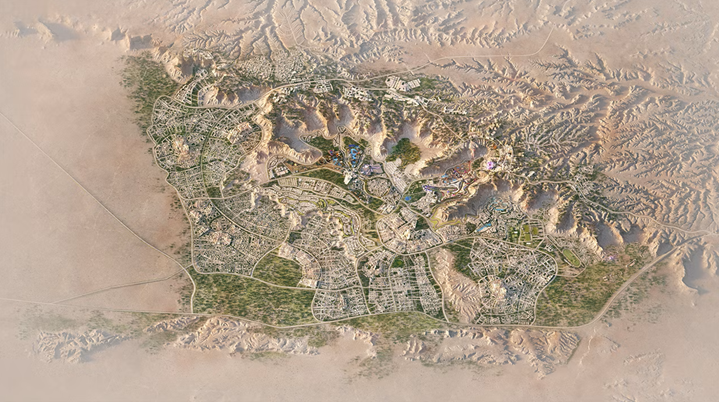
Alongside this, I have been involved in a series of large-scale master planning and citywide public realm projects at various stages, from early visioning through to design development, for a new city centred around play and set within a dramatic natural landscape near Riyadh. Working with multidisciplinary teams and consultants from across the globe has been a valuable learning experience. Designing in an extreme climate, and within a play-driven urban framework, has pushed me to imagine future cities differently and strengthened my skills in creating more comfortable, resilient and people-focused urban environments.
From all of your professional and academic practice what is your definition of Urban Design?
Urban design, to me, is the process of shaping the physical and spatial framework that supports urban life. We provide the structure through streets, public spaces, and connections, but the life within those spaces evolves through community interaction and time. Unlike architecture, which can sometimes reflect individual expression, urban design is inherently collective. It creates the conditions for a shared city identity to emerge.
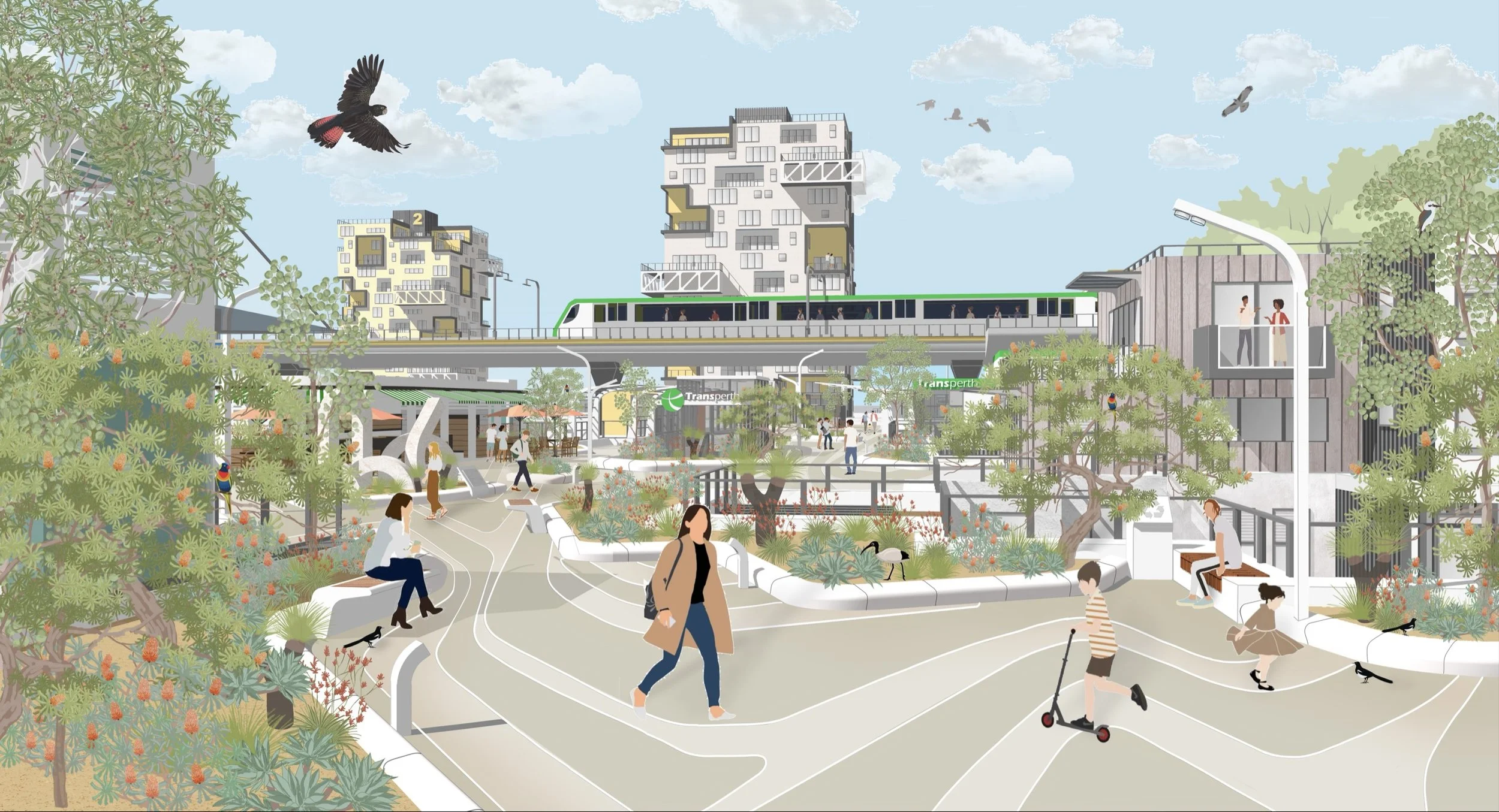
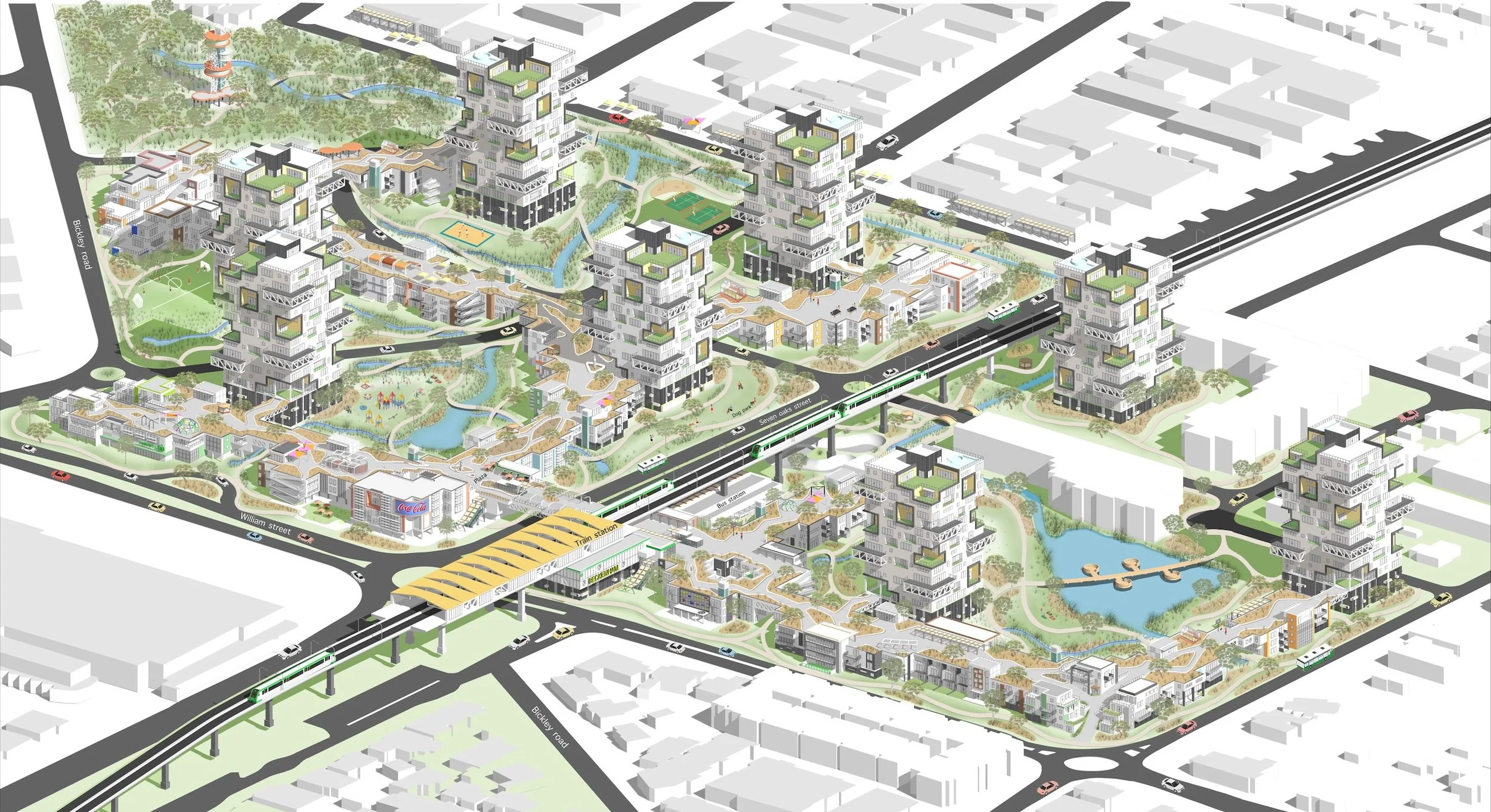
ABOVE: Beckenham Activity Precinct. 2022. Challenging the rigid frameworks of traditional transit-oriented development, this masterplan for the Beckenham Station Precinct explores how high-density urbanism can remain socially inclusive, grounded in place, and responsive to community life.
ABOVE: Whatley Crescent Upgrade Project. BELOW: Indicative aerial vision of the city. Image sourced from the Qiddiya website.
Join other postgraduate professionals for an exciting and rewarding opportunity to study in the dynamic and contemporary field of Urban Design. AUDRC offers a Graduate Certificate, Graduate Diploma, and Masters in Urban Design, with units often delivered after-hours to accommodate full time work and other commitments.
To learn more about the program CLICK HERE