
ALUMNI STORIES
NUR MOHD ROZLAN
Graduate Place Planner, City of Vincent, Perth, WA. Completed Master of Urban Design. 2023
Why did you decide to study urban design at AUDRC?
I first became interested in urban design when I enrolled in Julian’s studio during my architecture undergrad. The brief was to design a charter city in northern Australia in response to climate-related migration. It made me realise how design could drive positive change at a much bigger scale and respond to real-world challenges. From then on, urban design stayed at the back of my mind throughout my degree.
I’ve always been interested in culture, history, the arts and everyday life, and urban design felt like a field where those interests could come together. AUDRC’s Master of Urban Design stood out because of the flexibility to take units across other faculties to complement my interests, such as planning, geography and economics. I believe being a good designer requires broad knowledge and an understanding of how physical and non-physical aspects of our environment influence one another.
What is your professional background?
I completed a Bachelor of Design at UWA, followed by a Master of Urban Design with an environmental planning focus at AUDRC.
During my studies, I worked part-time as a Design Review Program Assistant at DPLH for a year, and later as a Graduate Urban Designer at PLACE Laboratory.
Currently, I’m working as a Graduate Place Planner at the City of Vincent. My role spans a wide portfolio of projects, from hands-on work supporting businesses and the community to improve town centres, to longer-term strategic work such as urban design testing for key sites, streetscape enhancement and strategic guidelines for the public realm.
How has studying urban design at AUDRC enriched your practice?
The degree allowed me to study complementary units from other disciplines. It pushed me to think beyond design as purely a physical outcome and consider the broader systems shaping our cities.
Through the course, I also studied alongside students from non-design backgrounds. Their fresh perspectives challenged my thinking and expanded the way I approach design problems.
The tutors created an environment where we could pursue topics we were curious about and experiment with different ways of representing ideas. That freedom helped me develop my own voice, diversify how I communicate design ideas and explore topics in greater depth.
What inspires you? Professionally and/or personally?
Growing up between Kuala Lumpur and Perth sparked my curiosity about how people use space and how our environment shapes everyday life. When I travel, I enjoy exploring local neighbourhoods and observing rhythms of daily life different from my own.
I’m inspired by the creative ways people interact with their surroundings. Whether it’s about carving out their own space, finding solutions with the resources available to them or bringing order to the chaos of cities. I find the unpredictability of cities exciting and it reminds me that design is less about control and more about creating spaces that people can inhabit, adapt and make their own.
I also draw inspiration from visual arts, particularly illustration and graphic design, and the ways different cultures express ideas and tell stories. In urban design, we are often trying to open people’s eyes to new visions or encourage them to experience something new. Therefore, how we communicate that message through visuals, storytelling or shared experiences is just as important as the design itself.
Can you talk about a specific project or projects of interest that you worked on?
At PLACE Laboratory, I contributed to the early concept development for an art component of the Perth Cultural Centre project.
The concept was centred on water stories and seasonal cycles. The team explored ways to integrate water patterns into the ground treatment, alongside animal engravings embedded throughout the site for people to discover. These extended to log seating elements and ground inlays referencing native flora and fauna.
My role involved researching water-based animals and their seasonal behaviours and translating that research into early concept sketches. I never expected that sketching animals would become a part of my job!
We worked closely with art consultant Karrda, who brought deep knowledge of the site and stories significant to the local community. That collaboration reinforced how important it is to approach place-making with cultural sensitivity and curiosity.
Although the art elements formed only one layer of the broader project, they helped shape the identity and experience of the place. For me, it demonstrated how even subtle interventions can meaningfully influence how people connect with a space.
From all of your professional and academic practice what is your definition of Urban Design?
For me, urban design sits at the intersection of strategy and lived experience. It shapes the physical and social frameworks that support how people actually live, gather and adapt, rather than prescribing fixed outcomes. Because cities are never static, good urban design creates environments that are resilient, inclusive and able to evolve over time.
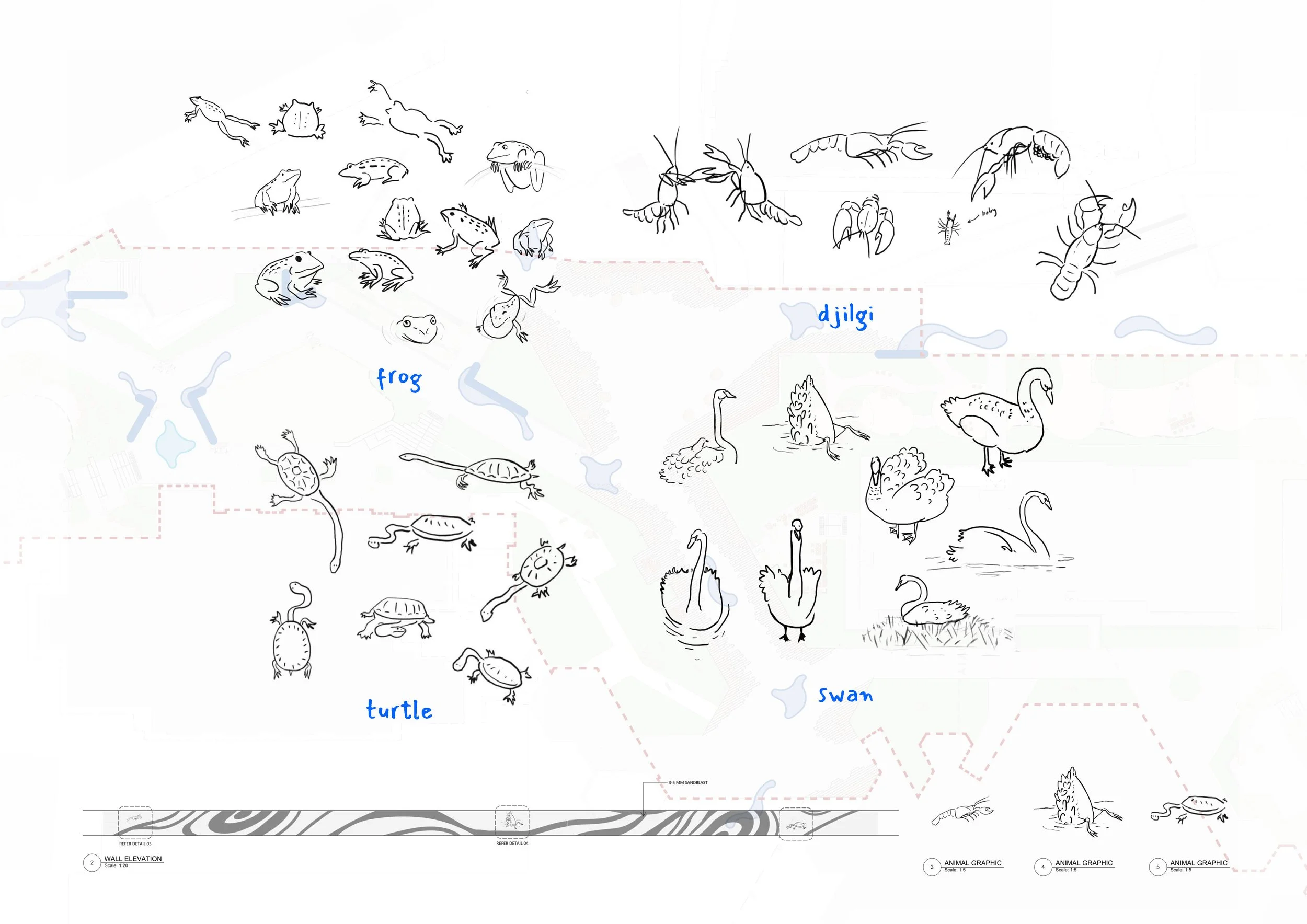
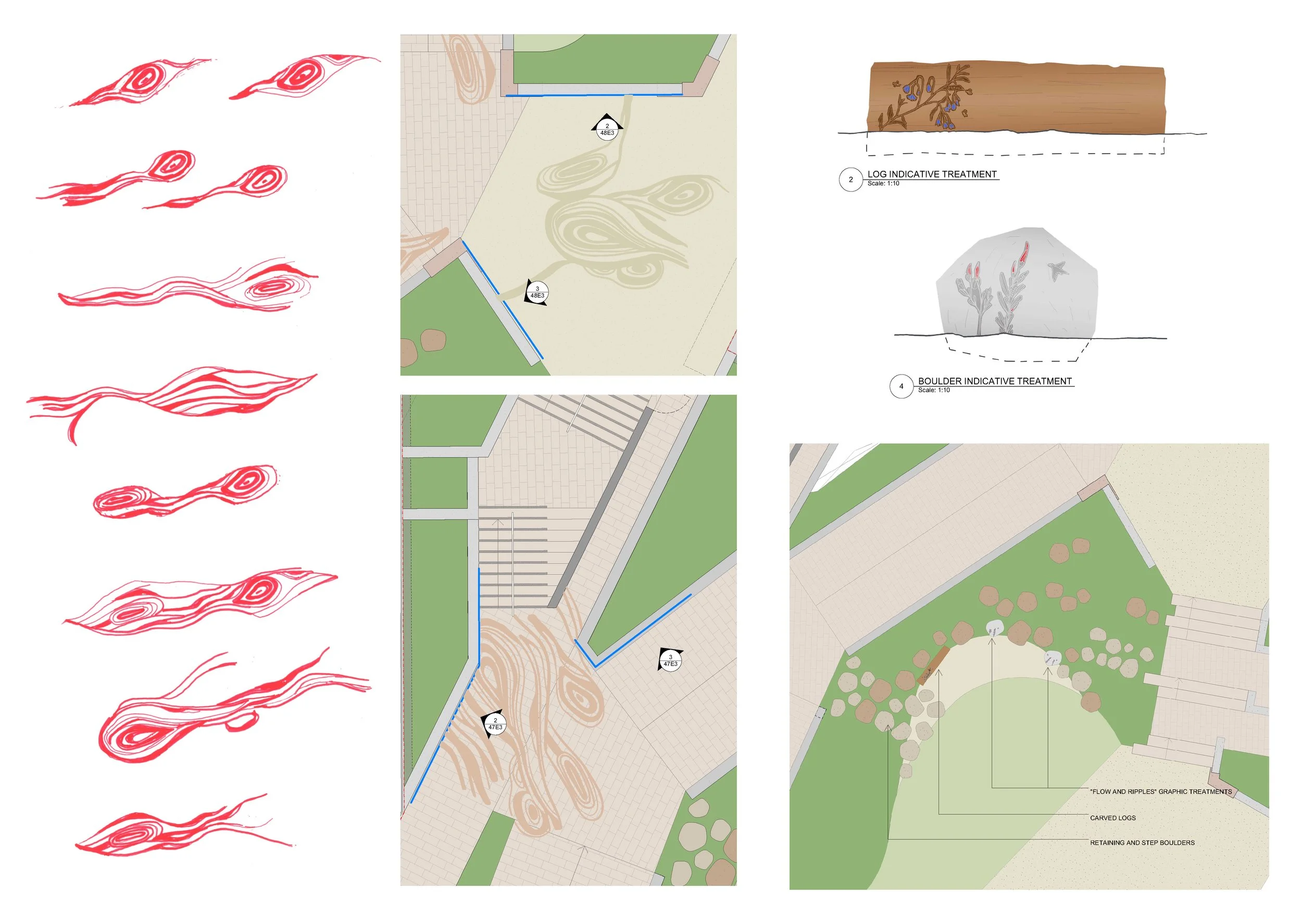
ABOVE: Early concept sketches for animal installations at Perth Cultural Centre. Each animal was developed with a distinct character and behaviour reflecting the seasons. The lower elevation explores potential wall locations and their interaction with inscribed water patterns.
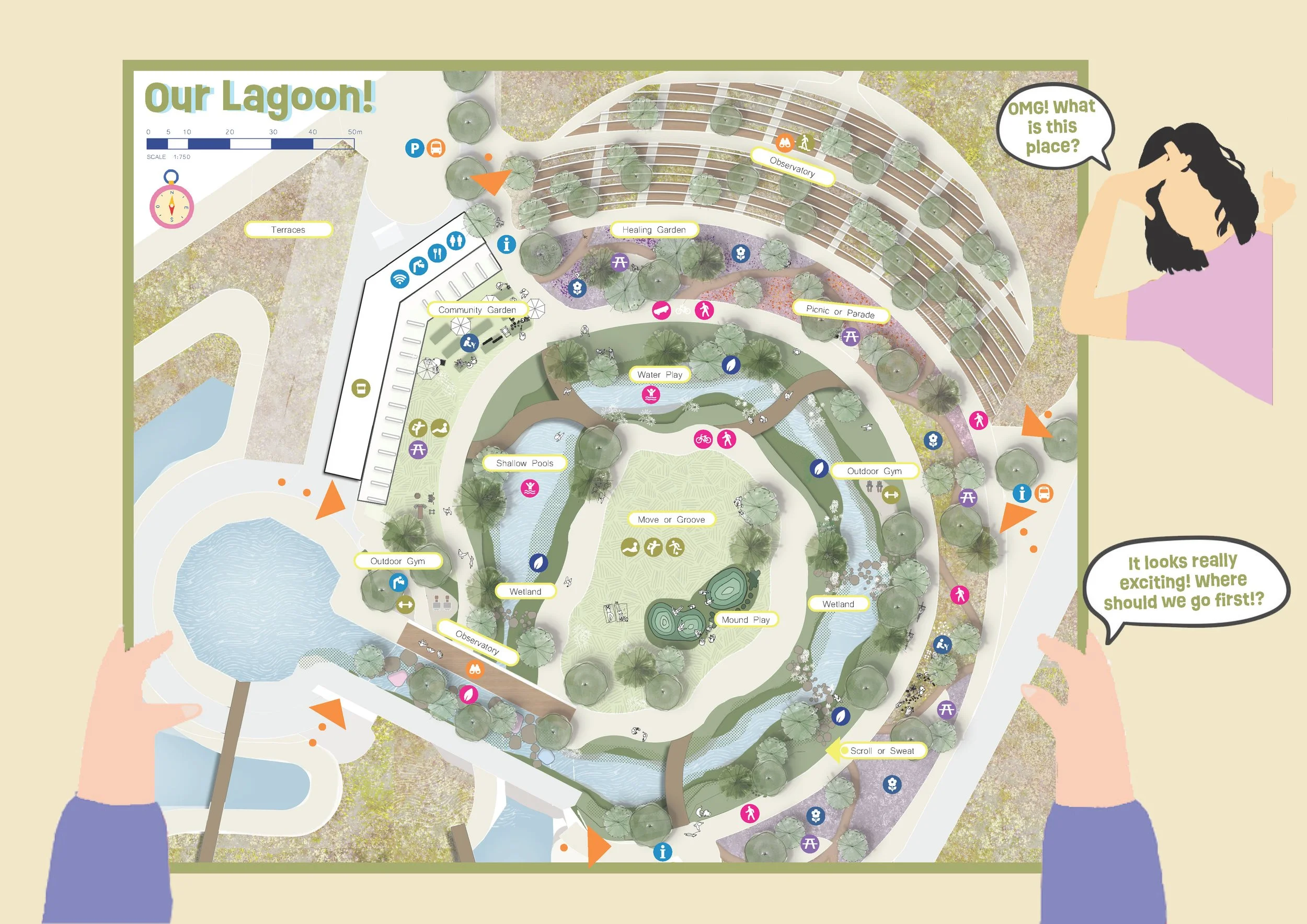
ABOVE: To strengthen Russell Street’s role as the gateway to the area, the team developed landscape, lighting and transport movement plans to improve identity, legibility and pedestrian experience. BELOW: Competition proposal developed with PLACE Lab colleagues for the Landezine Lost Site Competition. The project reimagines the abandoned Athens Olympic Canoe Centre as a landscape of play and gathering for girls and young women.
Join other postgraduate professionals for an exciting and rewarding opportunity to study in the dynamic and contemporary field of Urban Design. AUDRC offers a Graduate Certificate, Graduate Diploma, and Masters in Urban Design, with units often delivered after-hours to accommodate full time work and other commitments.
To learn more about the program CLICK HERE